
Amateur Hour
Not for marks

I learnt a few weeks ago (via Elif Shafak) that the etymology of the word amateur comes from the latin root amare, which means to love. Shafak writes that, “an amateur is someone who continues to create, not necessarily for money or promotion or trinkets of fame, but primarily because of love”. I think we could add participate and learn to that list. An amateur is someone who continues to create, learn and participate, for the love of it. Or, as one of my husband’s jamming pals said last night, “it’s nice to to do things ‘not for marks’”.
Do you remember that phrase from school? ‘Not for marks’. It instantly freed me. Do whatever you want and don’t worry about the outcome. For some this was a way to opt out of any kind of effort, but for others it was an invitation to have fun, to try something new, to not take yourself too seriously.
In a recent New Yorker article Joshua Rothman asks, why is it so hard to be ordinary? He starts by looking at kids sport (side-eye-ing all those parents on the side of the field pretending it is the world cup final every Saturday). Why is it so difficult to find satisfaction in what’s average?
The excellent starts to shame the ordinary, leaving it worse off. We want to play winning seasons, not average ones…. We’d prefer “great” weekends and vacations.
...Cars and houses get bigger and bigger. Grades inflate forever. Kids join travel teams, spending hours driving to competitions with other mini-athletes, and parents become super-parents, spending more hours with their children than in previous generations.
Perhaps the impulse towards greatness is natural, maybe even good. Perhaps we realise we have, or our child has, a talent. Isn’t it profligate not to hone this potential? And yes, sure, try your best is always good advice, but in a world obsessed with limitless growth it very easily gets mixed up with issues of self-worth.
And also, it is okay that there are some just truly brilliant people out there. That rarity should be celebrated, enjoyed by the recipients of those talents (where would we be without Bach?). But brilliance, by definition is rare.
Rothman writes that many of us get trapped in ‘greatness thinking’. ‘Veering between striving and settling, a person caught in the greatness trap struggles to admire the best without making everything else seem worse.’ Comparison is the thief of joy. We all know it. But it is so hard to let it go.
But what if being ordinary, doing something for the love of it, not for marks (or profit or fame), is actually essential not just to your own wellbeing but for the wellbeing of the world at large?
This week Don Pinnock is writing in the Daily Maverick about the current mess at Kirstenbosch. One of the aspects of the declining quality of the botanical garden which stood out for me is the collapse of BotSoc (the Botanical Society of South Africa). BotSoc ‘formed a crucial part of Kirstenbosch’s support system. Its members paid subscriptions, supported projects and, importantly, supplied a pool of skilled and committed volunteers.’
These are people who are ‘amateurs in the best sense: deeply knowledgeable people motivated by a love of plants rather than salary or promotion.’
A perk of BotSoc membership was free entry into National Botanical Gardens around the country, including Kirstenbosch. But COVID happened, and there were no tourists, so this privilege was revoked and over time this has meant that the once 25,000 members and now sits at about 2,200.
This army of amateurs, doing things not for marks, is essential to keeping the garden going. It is ‘a support structure, a funder of urgent interventions and a source of volunteers. Kirstenbosch depended on people who weeded, potted, propagated, labelled, observed and brought long memory to the garden’.
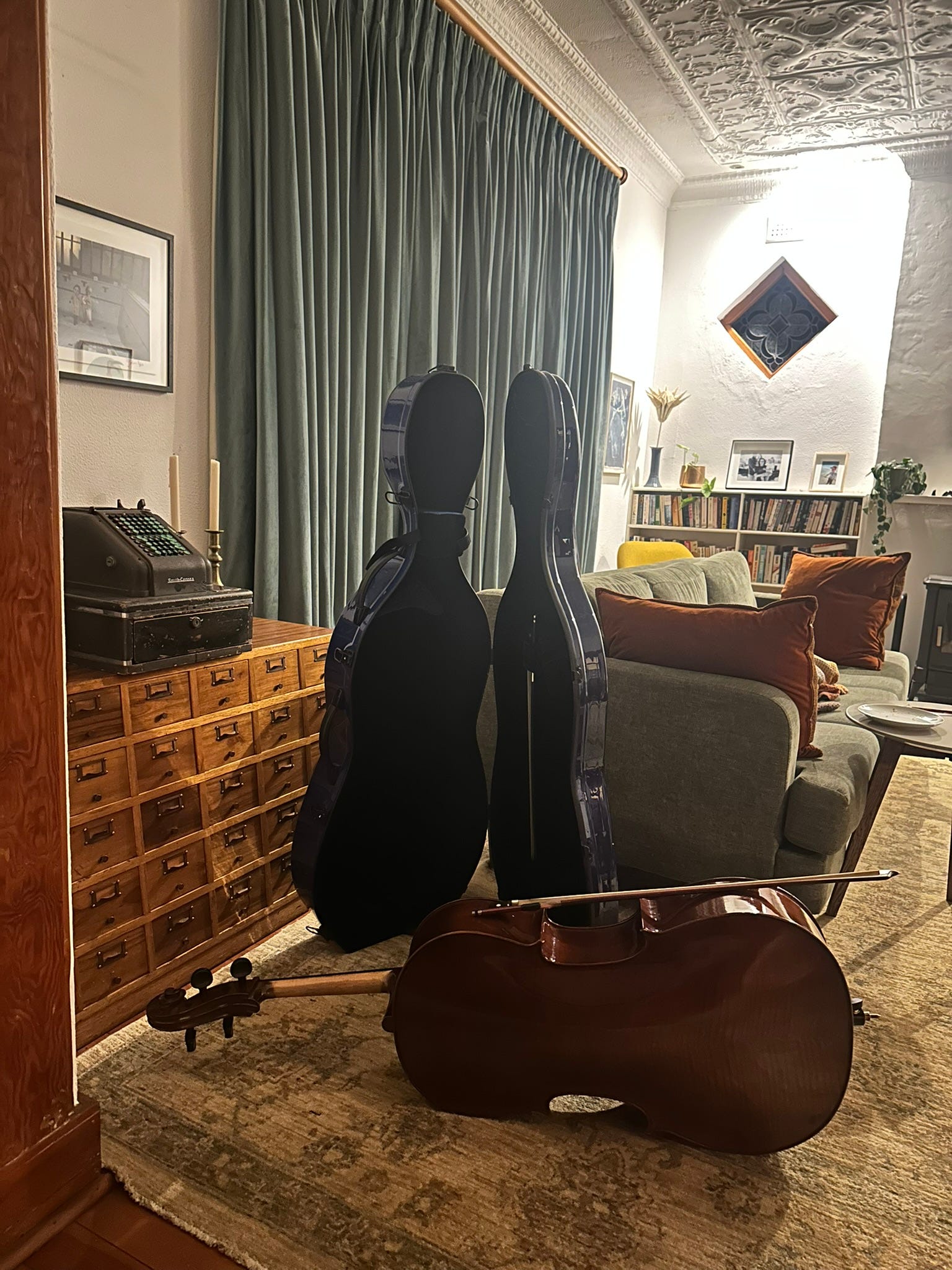
I belong to a community orchestra and we had our AGM on Monday night and I was reminded again about how important people who weed, pot and propagate are to the future of brilliance.
How do you keep a culture of anything alive? How do you create a substrate out of which brilliance can grow? You show up, week after week in an unglamorous church hall, practise your music, and put your ego to one side and exist in the joy of a thing that is bigger than you.
We had a youth concert this past weekend. The young soloists were brilliant. Their repertoire included Grieg, Mendelssohn and Bach. But without the orchestra's plodding (and often it is Plodding with a capital P), these young kids wouldn’t have an entry level opportunity for performing a concerto with an orchestra.
Maybe you got distinctions for your high school music exams, but now you don’t practise as much, your hands are pre-arthritic, your sight and hearing are going - do you continue? The answer is a resounding yes. Because it is not about you. It is about Music, Nature, Art, Sport. Whatever magic of the universe chimes with your existential impulse.
Whenever I feel embarrassed about inviting people to be a part of my amateur activities, I remind myself of that. We are not the ocean, we are the smallest of tributaries. Probably a muddy one, that dries up with frustrating frequency.
Last night, after a long day of work and stress, a group of friends got together to play some music. Was it perfect? No. Was it bad? No. Was is fun? Absolutely. Did it discharge energy into the world to do more creative things not for marks? Yes.
But it takes showing up and accepting imperfection. I’m almost certain this experience of trying and failing and being okay with it makes you a better human. Rothman concludes that,
Ultimately, what is unrealistic is not the hope that we might live in a world that is good-enough for all, but rather the belief that we can keep surviving in our greatness culture, with all the hatred, inequality, and destruction that tear us apart.
I believe that there is actually a kind of talent in accepting that you’re not-the-best but good-enough. Accepting one’s ordinariness is “both relaxing and difficult”.
In some ways, it might be easier to go all-out, aiming for a level of individual greatness that you’ll probably never achieve, and harder to think of yourself as an ordinary person among many other ordinary people.
So embrace the ordinary. Serve the cake that flopped with a laugh, knit that jersey, join your local choir, play your instrument badly, run your 10km slowly. Because keeping anything going that isn’t motivated by profit or power is incredibly difficult and the world needs more ordinary people like you. This is where beauty begins and brilliance resides.
This blôg has almost 500 readers. Thank you so much everyone! I love writing it, warts and all (I allocate 2 - 3 hours a week to it, so if there are typos or flaws in logic, now you know why). If you enjoyed reading this, please consider sharing it with someone I don’t know. Word of mouth helps immensely. What will it do? Well, these days to get things published you need to demonstrate that people want to read what you have to say, which as you can see traps you in an infinite loop of despair - you need to write something and have people read it to write something to have people read it. Haha. So...
Also just to say that my shopify is closing at the end of August. It is quite an expensive platform, so I’m looking at new options. But if at some point you thought, ‘I’ve enjoyed reading this as much as a cup of coffee’, please consider buying me one :) Thank you!
Loved 'not for marks'. Freeing! It was evocative of a couple of columns I enjoyed from Fr Richard Rohr on the dangers of striving for perfection, See https://cac.org/daily-meditations/releasing-any-need-for-perfection/ and https://cac.org/daily-meditations/the-heresy-of-perfection/
"Where beauty begins and brilliance resides'" could be the title of the your corpus of work.!