
What is authenticity?
1. We only ever speak one language. 2. We never speak only one language.

I have almost finished reading The Loneliness of Sonia and Sunny by Kiran Desai and have loved all 600-odd pages of it (I still have about 150 to go!).
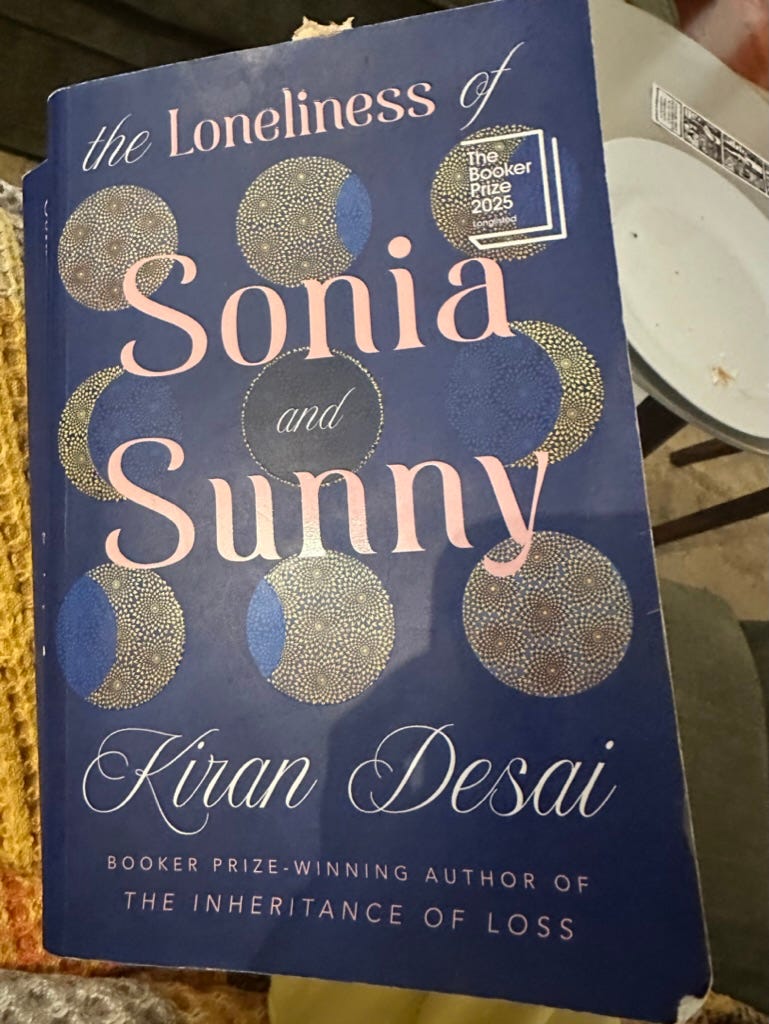
With the narrative taking place mostly between 1996 and 2002, the novel tells the story of Sonia and Sunny, both Indian, one a student in Vermont, and the other a recent graduate from Columbia planning to immigrate to the United States, whose families are long acquainted before they first encounter one another on a train in India. The meeting leads to an extended romance between the two young characters through the thrum and churn of the post colonial world (Wikipedia).
A theme running throughout the novel for all the characters is the problem of authenticity. What is it? It is achievable? And who assesses whether one is an insider or an outsider? These questions pertain to race, class, cultural identity as much as they do to ideas of femininity, masculinity, the role of the artist in society and the strictures and freedoms of religion.
The novel begins with Sonia, alone, in snowy Vermont. The college shuts down in January because it is too expensive to heat. All those without the constraints of money or visa issues have departed for the great elsewhere.
Sonia is an aspiring novelist and ‘finds solace in Tolstoy, but is perplexed and provoked by the idea of magic realism and “the enticement of white people by route of peacocks, monsoons, exotic-spice bazaars”. The dilemma facing an Indian writer, she ponders, is one of obeisance to the west’s appetites and projections, and the lure of producing “stories cheapened by proliferation, decorative outside and hollow inside”.’1
In this state she is seduced by a ‘narcissistic artist who... suppresses her literary endeavours and then abandons her (“don’t write orientalist nonsense! Don’t cheapen your country or people will think that this is actually India … What Westerners did to you, you are doing to yourself”).’
And from this point onwards, the tension of representation plays itself out between families, friends and lovers. It is a wonderful, insightful, and entertaining read. A story you can really sink into.
These themes of representation and authenticity are of abiding interest to me and carry across to our own context very well.
Once upon a time I was researching student language biographies. What languages do we speak, to whom, when and why? What language do we dream in? What accents surround us and can we play with them? When do we feel most proficient and most inept? Have we ever been told to ‘stop speaking like that’? And what does ‘like that’ even mean?
The stories from this research all pointed towards the conundrum of authenticity.
In everyday life being authentic has taken on moral overtones. If we describe someone as authentic we seem to be saying they are honest, transparent people with no real agenda. But if we scratch beneath the surface, authenticity requires someone to match the idea we have of them. There is some imaginary category we are measuring them against. Which hardly makes authenticity a neutral characteristic.
The term “identity” often seems to imply the sense of a singular authentic self, and because of this boundaries of difference are necessarily constructed. But once we have done this, it immediately becomes a falsehood, because there is not one way of being something.
In a context where meanings are constantly shifting and modes of identification opening up, authenticity becomes the battleground for cultural belonging.
The impact of these, often micro, cultural assessments of self and other can only be fully appreciated within the context of power relations.
To understand the dislocated international student, the controlling mother, the pull of the ancestral home, the postcolonial writer... we need to situate our understanding of identity in terms of social location and the various forms that power can assume: institutional, political, economic, discursive, and so forth.
The way these things play themselves out make for compelling stories. We see the nostalgia of trying to find some authentic source of identity unpolluted by modern forms. We see how the same ways of being can be the object of desire and derision. We both valorise the one who managed to escape the post-colonial malaise and study abroad and hate them for it. And the one who thought they were escaping the unease of home, only find their discomfort redoubled in their new location where they are a permanent outsider.
We are described as being too much or too little of something: Christian, Hindu, woman, Model C kid - the list is endless, because invented categories are endless.
Derrida, in his tiny and powerful book The Monolingualism of the Other presents us with two contradictory statements.
1. We only ever speak one language.
2. We never speak only one language.
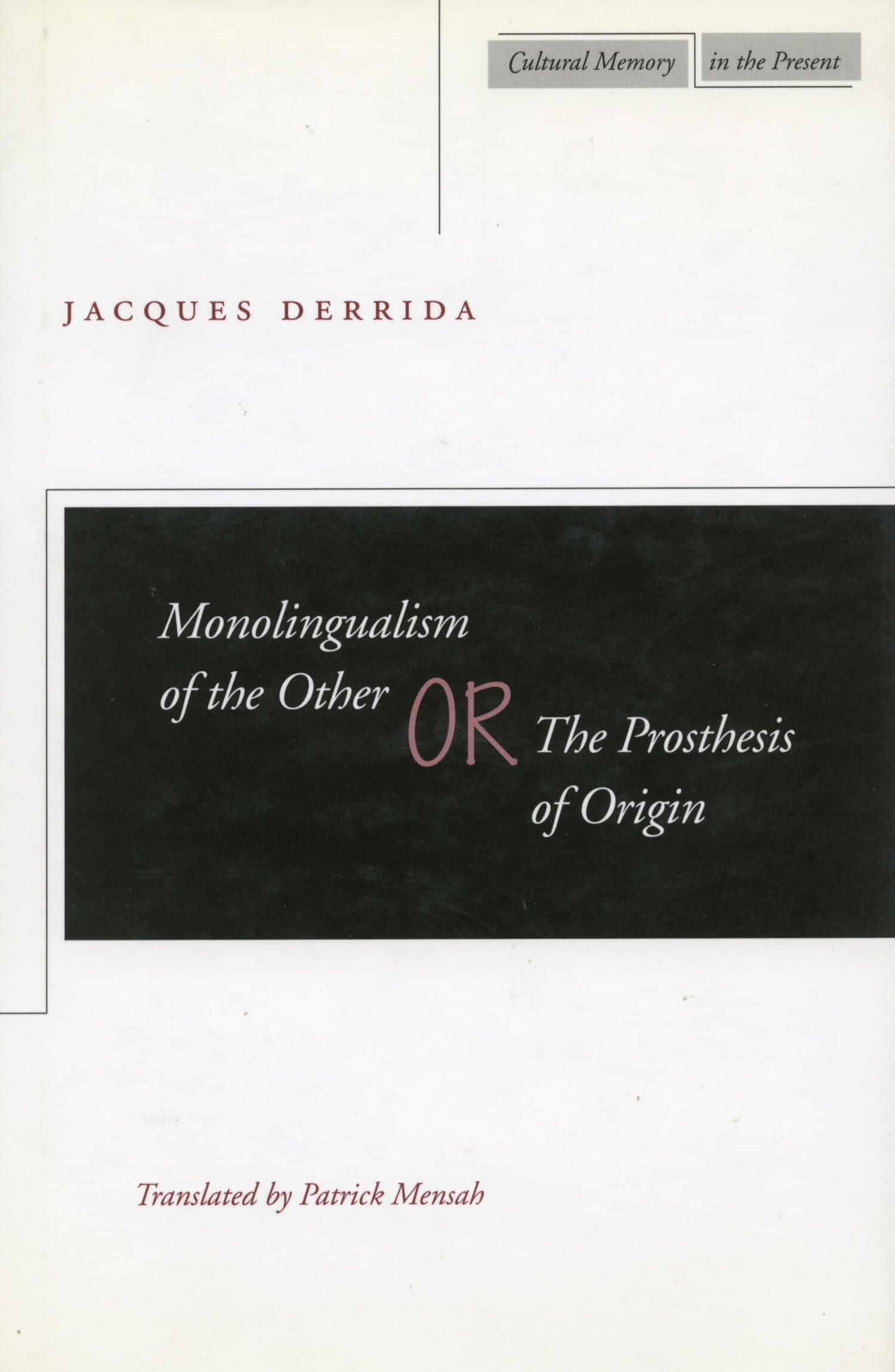
Through his theoretical-autobiographical account of his relationship to the French language as an Algerian Jew he demonstrates how the languages that we speak are soaked in biographic particularity; historical specificities and language ideologies that produce a certain subject position; and an individual with a certain set of experiences.
We might think of ourselves as one thing, but who we are is given to us and then re-interpreted by our own life trajectory, complicated by the terms on which we are rendered knowable by others. ‘But he doesn’t look like a girl?’
Derrida writes that we become fascinated by our own division, a wonderful phrase. To be fascinated with one’s division against oneself, requires us to weave a narrative or reach for a logic that offers prosthetic coherence of our life experience.2 The stories we tell about our identity categories are like prosthetic limbs. Something that is not ‘real’, but feels real. Something that is not part of us, but is so part of us, so necessary to our existence, we can’t do without it.
What is more painful: believing so deeply in categories of difference that we constantly strive for some unattainable authenticity or realising that we are a permanent outsider to our lives and it is what we make of it?
I don’t really know. But one thing is for sure, I am so grateful for writers who elucidate these complexities of life through beautiful, compelling prose. There is nothing closer to ‘real’ life than the lives we find in books.
https://www.theguardian.com/books/2025/sep/09/the-loneliness-of-sonia-and-sunny-by-kiran-desai-review-a-dazzling-epic
The subtitle of his book is “or the prosthesis of origin”.